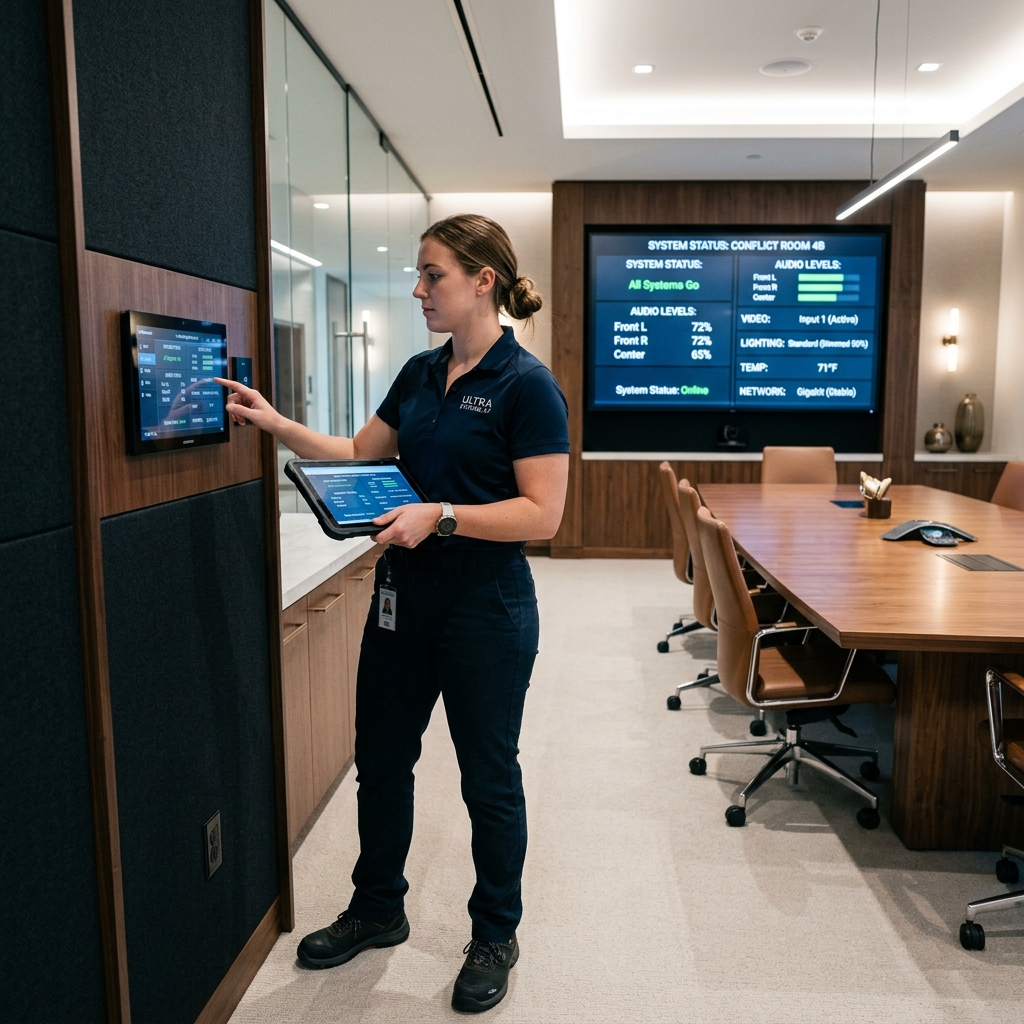

A meeting room is not a list of devices. It is a sequence of small moments — walking in, starting, sharing, including the people who are not in the room, leaving. When any one of those moments is awkward, people stop trusting the space.
Design for the first thirty seconds
The hardest part of most meetings is starting one. If joining a call takes more than a couple of taps, behaviour adapts around the friction: people dial in on laptops, ignore the room system, and the investment quietly goes unused.
One obvious way to start
One obvious way to share
One obvious way to ask for help
Behaviour over specification
Two rooms with identical equipment can deliver completely different experiences. The difference is how the system was shaped around the people using it — audio coverage for how they actually sit, camera logic for how they actually move, control that matches how they actually think.
Specify for the meeting, not for the datasheet.
The result is quieter technology and more confident people — which is the only metric that matters.