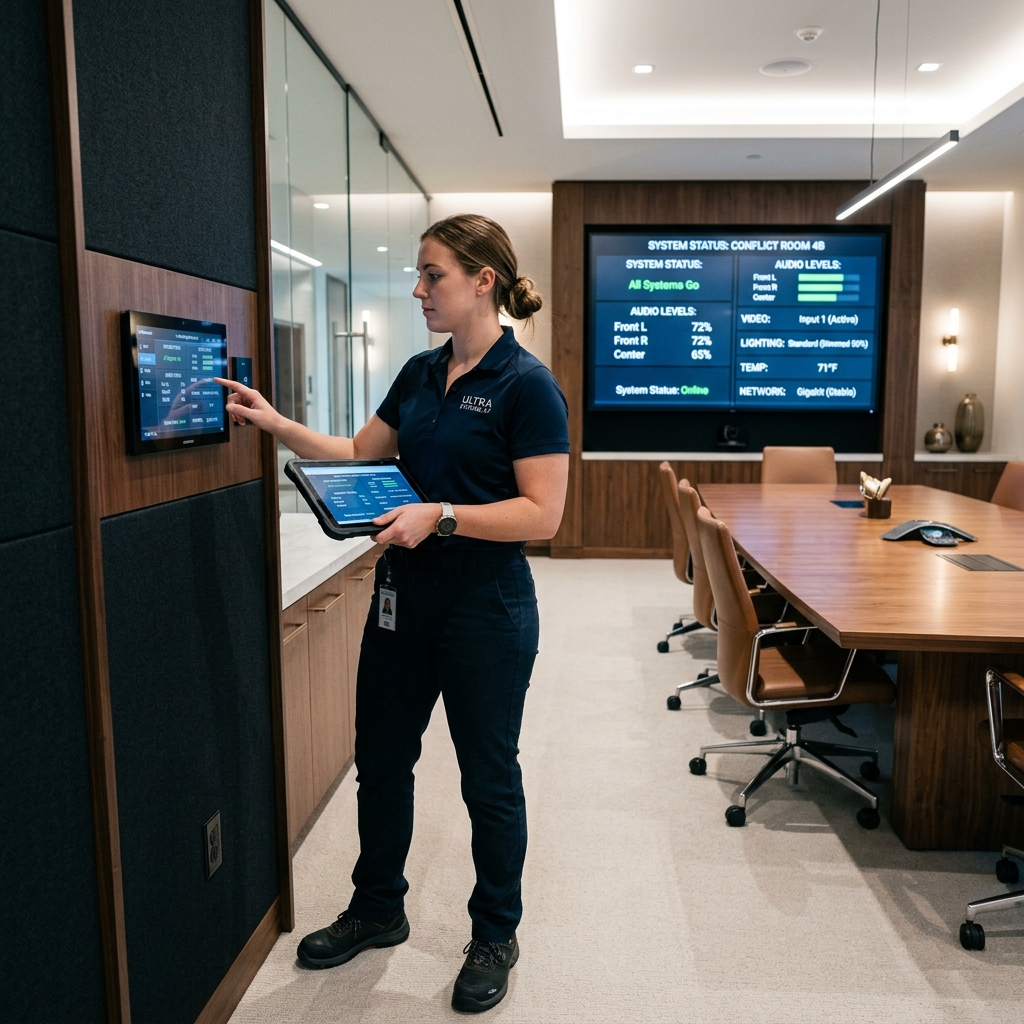

Most communication technology problems are not equipment problems. They are decisions made too late, by the wrong people, against a brief that was never written down. By the time a room is being commissioned, the constraints that mattered most — sightlines, acoustics, power, network, support — have usually already been set by others.
Start with the brief, not the kit
A good brief describes outcomes, not products. It names who uses the space, what they are trying to do, and what "good" feels like for them.
Who is in the room, and who joins remotely?
What decisions or work happen here?
How is the space supported once it is live?
Answer those first and the equipment list almost writes itself.
Coordinate early, decide once
Technology touches architecture, electrical, structural and IT. The earlier those conversations happen, the cheaper good decisions become.
The most expensive change is the one made after the ceiling is closed.
What to take into a project
Bring the space, the constraints and the ambition. A clear brief lets the design process resolve the technology path properly — instead of reverse-engineering it from a quote.