
Listen & Understand
Focuses on gathering context, client challenges, user needs and operational constraints before any technology is proposed.
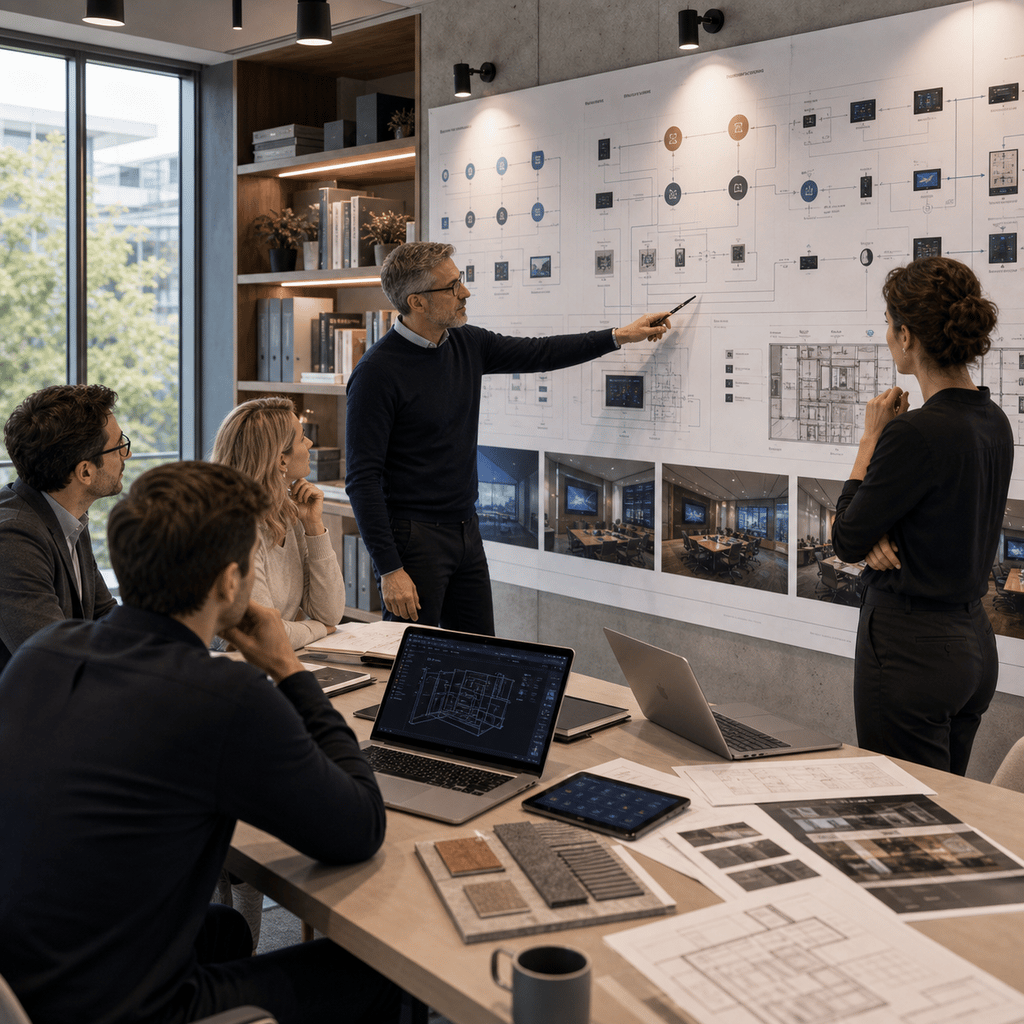
We use process to protect the quality of the final experience: listening before scope, scope before systems, design before delivery.
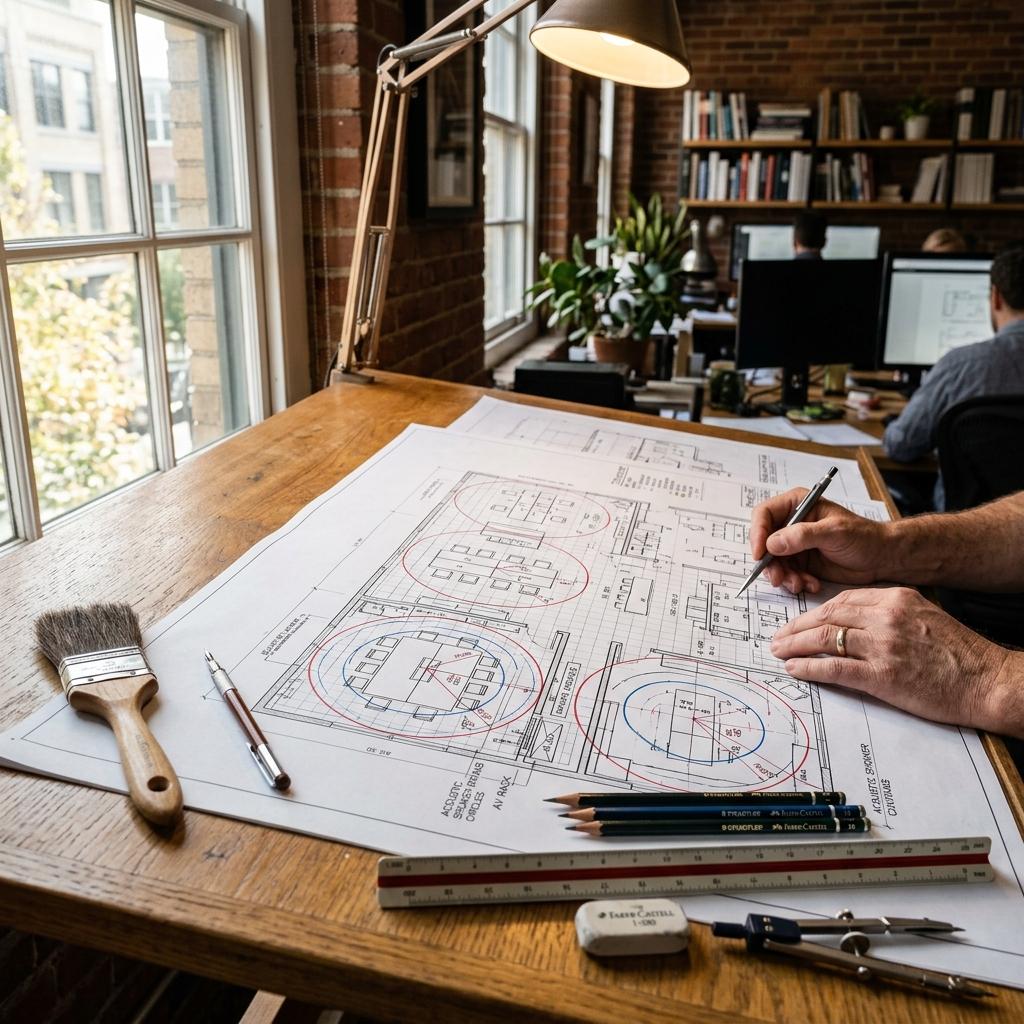
Seven stages, one cohesive experience.
Focuses on gathering context, client challenges, user needs and operational constraints before any technology is proposed.
Acts as a bridge between project teams, consultants and specialists to ensure early coordination on technical decisions.
Shapes briefs around desired outcomes rather than equipment lists, prioritising users, space requirements and support models.
Balances room behaviour, interfaces, content flow, audiovisual clarity, control logic and the overall human experience.
Translates concepts into precise technical documentation for contractors, project teams and stakeholders.
Guides the transition from design to reality by helping teams test, optimise and refine operational systems.
Builds repeatable frameworks and standards that scale easily across multiple rooms, floors and future sites.
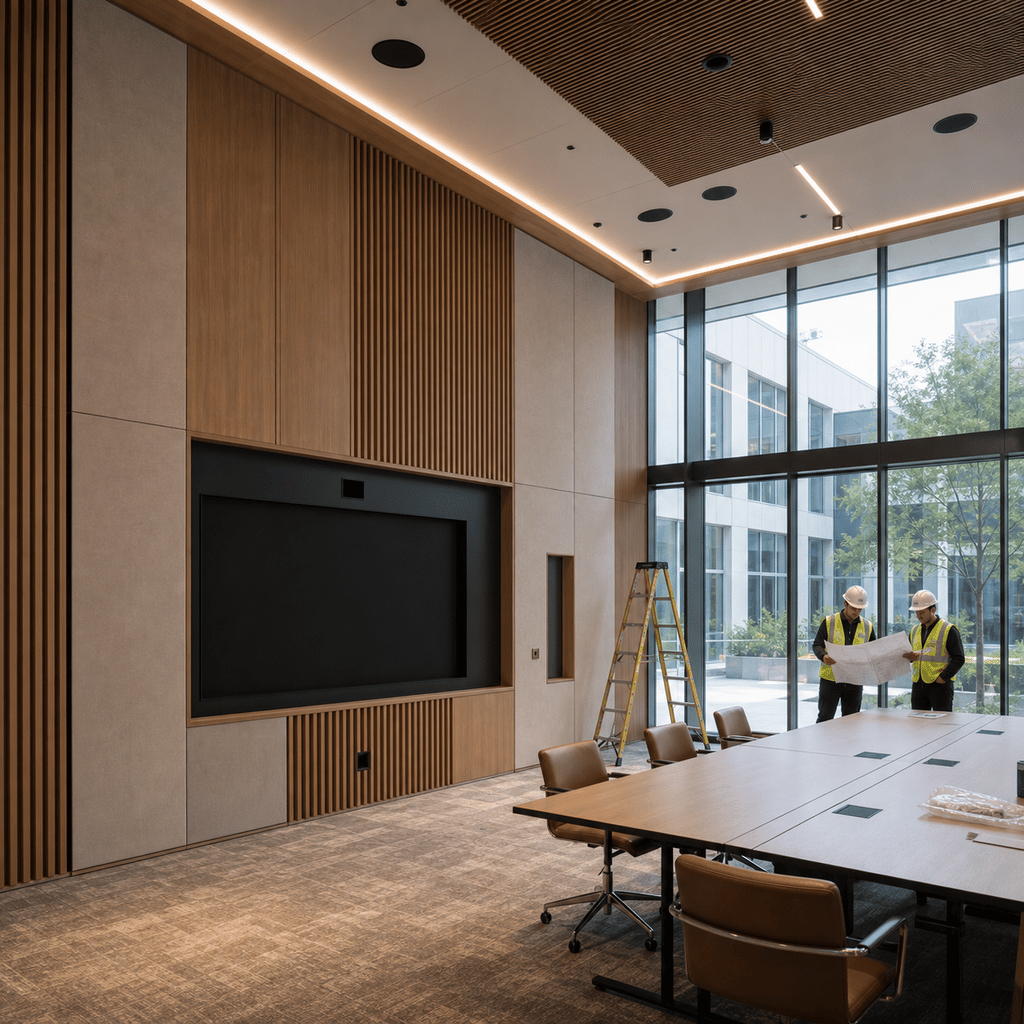
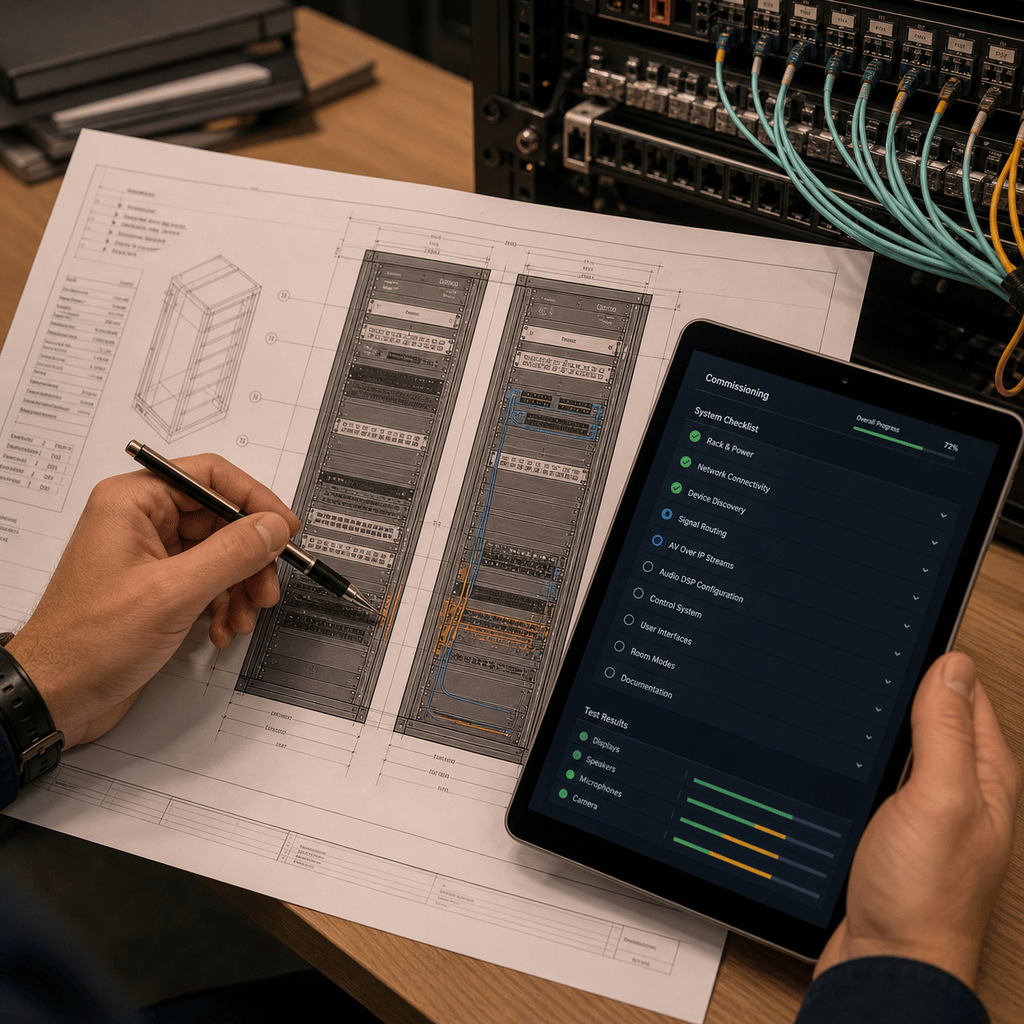
Technical depth from the earliest stage.
Clear decisions, responsibilities, documentation and approval routes for complex technology work.
Technical detail and coordination that reduce ambiguity before delivery begins.
Alignment between AV, IT, control systems, architecture, acoustics, lighting, platforms and engineering.
Repeatable room types, system logic, support models and documentation for long-term consistency.
Solutions designed to move from a single space to multiple teams, locations or future projects.
A shared language between client teams, design teams, technical teams and operators.

Specialist capabilities, unified coordination.
Visual comfort, atmosphere and technical coordination.
Speech clarity, spatial audio and performance requirements.
Platform logic, control interfaces and integration requirements around the AV experience.
Networks, security, platforms, support and governance.
Room behaviour, privacy, intelligibility and performance.
Spatial alignment, physical integration and design intent.
Media systems, storytelling, formats and operational needs.
Automation, user interfaces and room behaviour.
Technical detail, documentation and delivery coordination.
User flow, room purpose, furniture, adjacencies and layouts.