Automation in a meeting room should be invisible. Its job is not to impress — it is to remove the small decisions that get in the way of the conversation.
Good automation reduces choices
The best rooms ask the user for almost nothing. The lights, the displays, the audio and the camera respond to context: a booking begins, a person walks in, someone starts presenting.
Camera logic that frames the people who are speaking
Room states that follow the meeting, not the manual
Control that fails gracefully when something is wrong
Design for the support team too
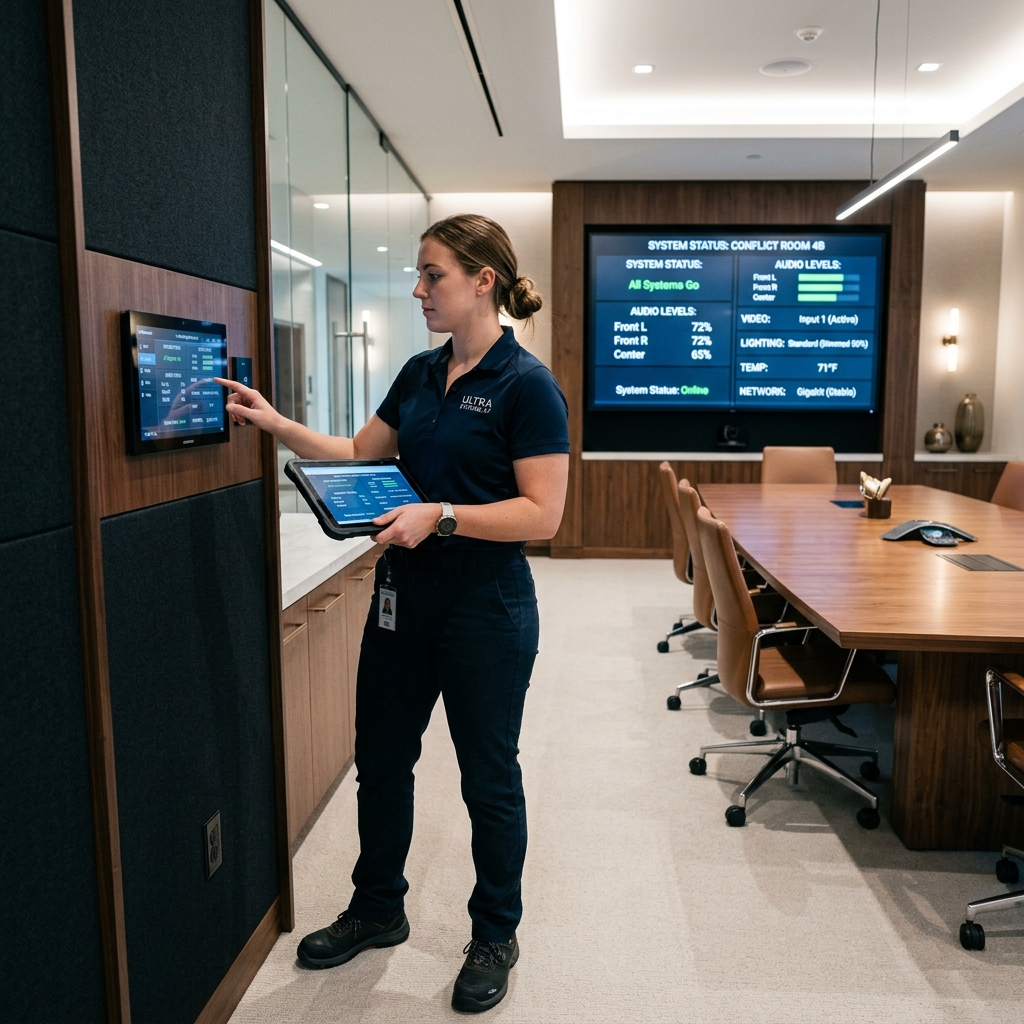
Automation that cannot be observed is automation that cannot be trusted. The same intelligence that simplifies the room should give the support team a clear view of what is happening and why.
If the room can explain itself, it can be supported at scale.
Smarter rooms are not about adding features. They are about removing friction — for the people inside the room and the people who keep it running.